« February 2006 | Main | April 2006 »

March 31, 2006

One of our girls (has gone missing)

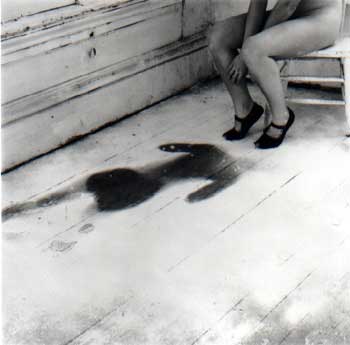
woodmanIV.jpg

I’ve been reading Sophie Calle’s “M’as-Tu Vue?” (“Do You See Me?”), a book that is entirely concerned with appearances & disappearances. The way that she tries to pin down chance, re-creating moments that never happened, taking the paths not followed, reminded me of Angela Conway, better known as AC Marias. Angela’s music took a similar approach —oblique strategies for a head-on world. Her haunting single, “One of Our Girls (Has Gone Missing)” has remained one of my favorite pieces of music ever since it was first released, back in 1989. The album continued her long-standing collaboration with Gilbert & Lewis of Wire, whom she’d worked with ever since her debut on their semi-legendary (and sadly out-of-print) collaboration P’O, back in 1980. She returned to offer vocal duties for the startling pair of releases the Wire compatriots completed as Dome (“1-2” & “3-4”).

She described her first single as "music to disappear to,” and she was enigmatic ever after, hiding behind the partially pseudonymous moniker “AC Marias” (Marias being her middle name) and describing herself as an "ex-babysitter, ex-girl, ex-traitor, on a mission to subvert the cretinous, moronic message of today's music," a statement she partially de-coded in a Melody Maker interview: "Ex-traitor I thought was quite funny, ‘cos there's no such thing. Betrayal, whether it's personal or political, sticks with you always. The ex-babysitter has two meanings: looking after somebody else’s kids, obviously, but it's also spy slang for heavies who look after the defector in the safe house. I used to read that kind of John Le Carré spy fiction. I like the jargon. It's intriguing."

"Disappearance can be quite a powerful thing," Conway said at the time of the title track, and later single. "To not be present can be more powerful than actually being present and proclaiming your identity as 'woman'. That can be quite rigid, which is why people often say they don't want to be categorised, because it can be confining." The haunting video clip for the song (directed by Ms. Conway herself), followed a dancer through the countryside and far out to sea —an act of joyful abandonment that called to mind the bittersweet ending of Kate Chopin’s feminist novella “The Awakening.”

After that, AC Marias faded away, leaving Angela Conway the video director (who was responsible for clips for the Smashing Pumpkins, Nitzer Ebb, and McAlmont & Butler, among others). Whether she has any plans to return to music-making someday is a mystery, much like the woman herself.

MP3.jpg AC Marias, "One of Our Girls (Has Gone Missing" [right-click-save-as, s'il vous plaît]

MP3.jpg Dome, "Jasz"

MP3.jpg Dome, "Cruel When Complete"

The Dome & AC Marias albums are available from Mutelibtech.

Photograph by Francesca Woodman.
March 25, 2006

Lurch & Destroy

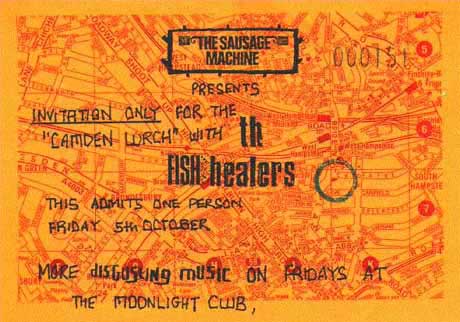
roz6-sausage.jpg

Th’ Faith Healers
PA’s Lounge, Somerville
March 22, 2006

I don’t remember where I was when I first heard the hypnotic chaos of th’ Faith Healers. (Don’t ask about the ‘e’ if you know what’s good for you —it got traded early on to either thee Hypnotics or the Headcoatees, we’re not sure which.) But I’ve rarely fallen so hard or so utterly for a band after only one song. It was that immediate, as simple as singer Roxanne Stephen intoning, “I’m in love, I’m in love, I’m in love.”

Repetition is one of the key ingredients of rock n’roll. Ask anyone from Gertrude Stein to Mark E Smith and they’ll tell you they dig it. Well, th’ Faith Healers honed repetition to a fine science. Over the course of four years, singles too numerous to mention, and two fantastic albums, the band kicked up a righteous racket —a furious, expressionistic squall. Their songs were built around monumental rhythmic codas, courtesy of the peerless rhythm section of drummer Joe Dilworth and bassist Ben Hopkins. Against this arresting backdrop, Tom Cullinan’s lead guitar held its own with a surprising amount delicacy, going into manic overdrive when need be but turning quiet and ringing when you least expected it.

I don’t know that I could tell you what they were “about” any more than I could explain why their gleeful, blistering brand of organic motorik stomp—a style that melded a kind-of angular, oddly articulate grunge to the clean, crisp rhythmic mantras of Krautrock— remains so compelling, more than ten years after their untimely breakup. Part of it was due to the fact that the band never once took itself too seriously. But credit also to the manic, charismatic energy of singer Roxanne Stephen, whose vocals could switchback from sweet and delicate to full-on shriek and back again.

I think my poor battered eardrums have only just now recovered from seeing th’ Healers, Band of Susans, and God Is My Co-Pilot all on one night, way back when. Which could only mean one thing: th’ Healers have reformed just in time.

I’m a little bit surprised to hear they’re playing at PA’s Lounge, way out in outer Somerville, rather than the more-expected Middle East (where they played their last time through Boston, a little more than ten years ago). The venue is a little hard to find and by the time we get there openers Bright are just finishing their set.

Luckily the band of the hour doesn’t make us wait too long. Once they start playing —ripping right into “This Time” with little fanfare— it’s like they’re picking right up where they left off, with the ineffable chemistry in place. Here’s where my critical brain shuts off, ‘cause I spend the rest of the breathless set grinning stupidly from ear to ear, screaming along to every word. And when I look around, I see everyone else is doing pretty much the same thing.

They play two sets (smoke break in the middle there). And, okay, I’m a little disappointed that they don’t play “Sparklingly Chime” (sigh) but they play "Heart Fog" (a joyful, poignant incantation) and their cover of Can's "Mother Sky" (from whence record label Too Pure got its name & my first introduction to Can) so I can’t complain too much. It’s as sloppy and gleefully shambolic a set as you might expect (some wag in the front row yells out, "You sound like you haven't played together in years!" after they flub a song), but their enthusiasm more than makes up for it. (And, really, you don't go to a Faith Healers show looking for crisp, curt professionalism —the joy of their music is in its inherently exuberant, messy nature.)

Really, few things make me happier than the music of this band and seeing them again is even better than I thought it would be. I tell that to Tom afterwards and he looks a bit sheepish. Still tired from what must have been a whirlwind at SXSW, he remarks that there were enough British accents wandering the streets of Austin that, in his quasi-jetlagged state, it almost felt like home. (The sweltering, parched-earth, overrun-by-hipsters version of home?) I get the feeling he’d be just as happy to be back in London and I wonder if this is the last, all-too-brief re-appearance of th’ Healers. If so, I’m thankful I got to witness it.

***
Th’ Faith Healers Peel Sessions is out now on BaDaBing! Better yet, go see ‘em next week in NYC or Philly:

March 27th: Brooklyn, NY, Northsix
March 29th: New York, NY, Mercury Lounge
March 30th: Philadelphia, PA - The Khyber (w/The Nethers, The War On Drugs)
April 20th: London, England - 93 Feet East

For some fun reminiscing about the Sausage Machine club (where th’ Healers got their start), go here. Yes, I still have my membership card! For biographical background, visit Horst's Faith Healers page, which has just about everything you'd want to know about the band and then some!

MP3.jpg th’ Faith Healers, "Everything, All at Once, Forever (Dub Edit)" [right-click-save-as, s'il vous plaît]

MP3.jpg th’ Faith Healers, "Curly Lips" (Peel Session, 1994)

March 20, 2006

Covering the Un-coverable (uh)

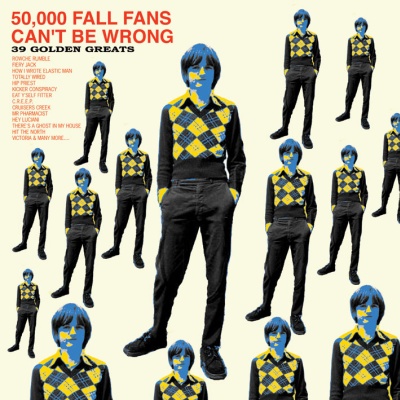
50,000 fall fans big.jpg

Oh, the Fall. How can you not love them? Mark E Smith may have been spurred to form a band by seeing the Sex Pistols in Manchester, but you can’t imagine him pursuing any career path other than the one he’s on. (Although “career” sounds so …yuppie-ish, something MES is decidedly not. Pardon.) To paraphrase the late, great John Peel, the Fall may always be different (they’ve gone through more band members than Spinal Tap) but they’re always the same. MES’s intimidating presence is hard to live up to (to say the least), which may be why covering Fall songs is a dicey proposition. There’s the tricky diction for one thing, and the way it melds so unerringly with the angularity of the lead guitar. Thern there’s MES’s inimitable, splenetic delivery, which only the deeply foolhardy would try to imitate.

It takes a strong band to wrangle a Fall song out of the long shadow of the original. But it can be done, as Dymaxion and Terry Edwards prove here.

Dymaxion was a short-lived but fantastic NYC band whose songs had a marked Scwhitters quality of culling beauty out of junk —rarely has a retro-futuristic collage aesthetic yielded such playful, layered results. This Fall cover is from their marvelous Duophonic singles collection, “4+3=38.33.” The band does a brilliant thing here: they rework the song into a kind of 50s infomercial jingle for an alternate (possibly totalitarian) universe, taking the shambolic low-end pulse of the original and performing a most cunning feat of transubstantiation. “No cigarettes, no whiskey, no style.” intones a crisp voice, and the next thing you know, you’ve woken up on a tropical desert isle populated by smiling, blank-eyed faces, all of whom look at you with recognition but you’ve never seen them before in your life. Then you bump into Number 6 and you know something is very, very wrong…

I don’t know much about Terry Edwards other than he’s worked with Gothy divas Pinkie McClure & Lydia Lunch and improv genius Lol Coxhill; he was part of Blast First’s Disobey Club, and he was the band leader for the San Francisco premiere of the Tom Waits/Robert Wilson/William S Burroughs production The Black Rider (which featured Marianne Faithfull and Mary Margaret O’Hara in lead roles). I’m not even sure where this cover of the Fall classic “Totally Wired” came from (another bounty from the vast reaches of the internet?) but it’s become a favorite of mine. We all needed to hear the Fall tune as a dubtastic rave-up didn’t we? Surely.

MP3.jpg The Fall, "U.S. 80s-90s"

MP3.jpg Dymaxion, "U.S. 80s-90s"

MP3.jpg The Fall, "Totally Wired"

MP3.jpg Terry Edwards, "Totally Wired"

The Dymaxion collection is available from Duophonic Mail Order. You can order the Fall collections (including the excellent Rough Trade comp Totally Wired) via Other Music, the Rough Trade shops, and Twisted Village, among others. Terry Edwards CDs can be purchased via the Sartorial Records online store.

March 15, 2006

Daybreak, forsake, heartbreak, fruitcake.

AYBS? (Yevonde).JPG

If you split the theme song to “Are You Being Served?” through a prism it might conceivably separate out into Prolapse’s “Visa for Violet & Van” on the spoonful-of-sugar-makes-the-noise-go-down side and Ladytron’s first single “Playgirl” on the other.

I must admit that I never liked the British sitcom this theme song derived from. The show was ugly and dull in that drearily 70s way —all polyester and over-emphatic, wincing attempts at humor. But the theme song —all forty-five seconds of it— evoked a halcyon time of glamour and jet-set living, a forgotten near-past that never really existed anyway. It’s done with breezy humor and a knowing wink, topped off with a soupçon of jaunty Whipped Cream and Other Delights-esque cheesiness.

Prolapse, bless ‘em, rhyme “risqué” with “stingray” on "Visa." (Leave it to the professionals, kids.) That’s not the only reason to love this song, which first appeared on a CD accompanying Brit music mag Volume and reappeared (in slightly noisier form) on the band’s third album, The Italian Flag. Linda’s airy, slightly bored recitation of coolly playful nonsense (a metaphysical shopping list?) contrasts perfectly with Mick’s gruff, intense philosophizing. It’s held together with an irresistible lock-groove bassline and delightfully wheezy synth howls. Only Prolapse could corral such a potentially awry song with such effortlessness.

Ladytron’s “Playgirl” evokes a suffocating world of hermetically-sealed femininity —the laugh that trills through the song is brittle; the protagonist “sleeps [her] way out of [her] hometown;” she “choke[s] on cigarettes” to mark time. It’s as heartbreaking in its way as Roxy Music’s excoriating “In Every Dream Home A Heartache” (although less noirishly psychosexual), concisely outlining a life that’s almost over before it’s even begun. The fact that the song is also ridiculously catchy rescues it from mawkishness.

Photograph by Madame Yevonde, circa 1938.

Much of Prolapse’s oeuvre is out-of-print. Try Amazon, Ebay, or your local purveyor of fine used CDs. Ladytron’s first album, 604, is readily available.

MP3.jpg ”Are You Being Served?” Theme

MP3.jpg Prolapse, "Visa for Violet & Van (Volume Version)”

MP3.jpg Ladytron, “Playgirl"

March 12, 2006

One Thing Leads to Another (Circuitously)

A little over a week ago I went to Kid Congo Powers’ record release party at Tonic in NYC. I’d tried my damnedest to talk myself out of going (NYC being a bit of a trek and all) but the lineup just kept getting better and better and I couldn’t in good conscience stay away. The show didn’t disappoint, touching on just about every facet of Kid’s long and storied career. (The video for “Hit the North” (-uh!) didn’t get an airing, but that was just about the only glaring omission.) The Sassiest Boy in America (aka Ian Svenonius) DJed. The NYC version of Congo Norvell reunited for a one-off; Kid’s new band the Pink Monkeybirds played a loose-limbed, delightfully louche set; Julee Cruise, Kid, and Markus Schmickler (Pluramon) formed a pick-up band; and Thalia Zedek joined Kid in a Gun Club medley to mark the tenth anniversary of Jeffrey Lee Pierce’s death.

The following day I went to see The Downtown Show. The most delightful discovery of the show (besides the pieces by Spalding Gray-era Wooster Group) was a short video performance art piece by Ann Magnuson. I got to wondering what she's been up to. Turns out she's recording an album in LA with Kristian Hoffman —who, coincidentally, was in the LA version of Kid Congo’s former band Congo Norvell. It should be ready by late spring or early summer.

bsi-flyer.jpg

This week I also finally saw The Nomi Song. I'd heard Nomi's music here and there —I still remember being stunned into silence by his performance of "Total Eclipse" on Urgh! A Music War, which I saw as an impressionable pre-teen. I was slack-jawed with amazement. (Although not as slack-jawed as I was at my first viewing of Lux Interior —whoa!) The documentary itself was fascinating, and ultimately quite heartbreaking —presenting a portrait of a man who was kind, gentle, and painfully, painfully alone. It's all there in his sad, expressionless Nomi face, with its poignant moue of surprise and its sharp angles. The human softness and expressiveness at war with the cold, angular outward appearance. And you hear it all in his incredible, soaring voice. Brimming over with emotion, it is almost inhuman in its distillation of heartbreak into such crystal-clear, beautiful notes.

I hadn’t realized until watching the film that Hoffman had also been Nomi’s primary songwriter. Hoffman —who started proto-New Wave band the Mumps with high school classmate Lance Loud (An American Family) and has gone on to collaborate with a roster of musicians as diverse as Nomi, Lydia Lunch, James Chance, Dave Davies, Rufus Wainwright, and the aforementioned Kid Congo— started his career writing literate, wry, lush pop songs at a time when wryness was not valued overly much (unless it was delivered via the alien visage of Nomi, a case of novelty trumping archness).

Hoffman was heavily involved in the Downtown scene, including the “New Wave Vaudeville” series that marked Nomi’s stunning début. So was Ann Magnuson, and in the early 80s the two collaborated with Robert Mache (who’d played in Hoffman’s lounge act the Swinging Madisons) to form Bleaker Street Incident —a loving parody of bleeding-heart folk-rock long before A Mighty Wind. The band was a proving ground for the mix of hallucinatory lunacy and incisive parody that Magnuson would later use to great effect with Bongwater (Exhibit A: The Power of Pussy’s nine-minute magnum opus, “Folk Song”). Hooray for unhinged, improvisatory rants —no-one does them better than Magnuson.

***

MP3.jpg The Gun Club, “Ghost on the Highway” (from Fire of Love)

MP3.jpg Klaus Nomi, “Mon Coeur”

MP3.jpg the Bleaker Street Incident, "Trigger Happy"

For more on the Bleaker Street Incident, look no further than Kristian Hoffman's homepage. (You can find updates on the collaboration with Ann Magnuson there too.)

March 07, 2006

Picaresque Elegies & Heartbroken Laments

CassMcCombs_DougFir_PDX_01.jpg

Cass McCombs/The Decemberists
Lupo's Heartbreak Hotel
Providence, RI

Cass McCombs’ timeless, unassuming songs and warm, humble demeanor were somewhat lost in the cavernous, imposing primness of Lupo’s. Why then did his songs play so much better than the Decemberists’ self-conscious, sometimes awkwardly formal song cycles?

For one thing, Cass’ songs of love and loss were accentuated and answered by the echoing, tumbledown openness of the club space itself. It’s a little bit lost, is Lupo’s. Despite a new coat of paint and some attempts at modernizing the place, it’s at heart an old theatre from a forgotten era. It had been shut for a number of years before Lupo’s moved in and gussied it up, and even today you can still see the unvarnished, humble backstage area in the wings, probably unchanged since the theatre was built in 1916.

McComb’s inward-looking, Hopperesque slices of Americana —tales of heartbreak and loss, buried under a self-effacement that would seem a little pathological if not balanced by the tonal clarity and melodic simplicity of his music— were a perfect fit for the bruised, slightly battered but regal space. Accompanied by an additional guitarist and a multi-instrumentalist who also traded deft harmonies with Cass, the songs were starker-sounding than on record but by no means dimmed. There’s a tenacious kernel of hopefulness at the center of these songs that saves them from becoming bleak —from the mournful, nostalgic “Mother and Father” (“Library doors are locked/You wait for day”) to the hazy, romantic urgency of “Sacred Heart” which brings to mind Strangeways-era Smiths. Leavened by a gentle wryness and gorgeous, airy harmonies, his music won the crowd over, slowly but surely.

By stark contrast, the Decemberists’ songs seemed both overstuffed and emotionally monotone. They were trying too hard, and it showed.

At the risk of being misinterpreted, I think they’re a band that is too damn smart for their own good. It’s not that I’m arguing for some sort-of “dumbing down” of rock music, or saying that the music of the Decemberists fails to engage because of its very cleverness. I appreciate the care that goes into their songs. I admire the craft of Colin Meloy’s literate, thoughtful songwriting. That said, I don’t feel as though music and lyrics add up to as much as they should. There’s a hint of smugness in Meloy’s self-presentation —a self-consciousness— that grates. The coolly detached formality of his songwriting sits awkwardly at odds with the dramatic, often raucous vibrancy of the music. The band isn’t afraid to let go, but Meloy is, and the group as a whole suffers for it. Even the addition of Petra Haden (late of that dog.) to the touring band failed to loosen Meloy’s somewhat starched reserve. But then, even if it their set failed to engage me emotionally or viscerally, the crowd —comprised of the most beaming, optimistic, utterly wholesome group of kids I’ve ever seen at a show— looked fully enraptured. I felt almost guilty for harboring unkind thoughts for their beloved bandleader. But not too guilty.

Decemberists merch is singularly pretty though. I nearly bought a poster before I realized with a start that I couldn't possibly hang a Decemberists poster on my wall when they irritated me that much. It'd be ...wrong.

But damn, it was pretty.

***

MP3.jpg Cass McCombs, “Sacred Heart”

For more information on Cass McCombs, visit his official site or that of his record labels, 4AD and Monitor. You can also add him on Myspace!

March 02, 2006

The Raincoats :: Adventures Close to Home

gina+ana 1979.jpg

This is another archival interview from Warped Reality’s first incarnation as a print zine. I’ve reprinted it as-is, so keep in mind that any references to the present are speaking of 1994!

***
The songs of the Raincoats seem to stem from some collective unconscious: upon first hearing them, one is struck both by their familiarity and their newness —it’s a language you’ve longed to hear although you’ve never heard anything like it before.

There surprise with their complexity, their elasticity, their playfulness that comes (perhaps) from their having built a musical language all their own. The Raincoats threw themselves fearlessly into the musical arena… and were often as surprised and exhilarated as the audience by the sounds that they produced.

The Raincoats formed in London in 1976. Ana DaSilva had recently arrived from her native Portugal. Gina Birch was from Nottingham. Both were attending art school. The atmosphere in London was already altering. Says Gina of that time, “People kept comparing the punk movement to Dada and stuff —which was probably a bit high flown! But, at the same time, there were a lot of interesting ideas going around. The first fanzines started, like Sniffing Glue. People were doing crazy things, interesting things, interesting fashion. “ Adds Ana, “It was really exciting, like you were in the middle of history happening.”

Ana and Gina soon became part of the insular London music scene, generally spending their time at the infamous and short-lived Roxy. “We started going to these gigs at the Roxy, and everyone there was going on about how easy it was and how everyone should do it if they felt like it. Gina and I went for a drink in a pub and just thought, ‘Oh, let’s do it!’” Gina laughs. “I remember when I bought my bass. We were in some political conference at Acme Gallery, which was near Shaftesbury Avenue where they sell guitars. On the lunch break, I went down to Shaftesbury Avenue and bought a bass for £40! And then I had my instrument. I took it home and spray-painted it bright blue!”

More cheeky than punk, really, but the spirit was there. The Raincoats aren’t usually mentioned in the “punk” category; often, they’re not mentioned at all. “We were considered very unhip by some people!” laughs Gina. “I think we were a bit bleak,” adds Ana. Their songs were too subtle for punk —there were no obvious sloganeering anthems or big, aggressive gestures. They weren’t afraid of harnessing the power of quiet moments. They were expert at giving a song added power by shaping it, giving it jolts and starts; alternating the soft with the angular. It is the careful orchestration and accretion of these subtle moments that makes Raincoats songs so alluring.

Now that the Raincoats are being rediscovered, thanks to the reissues of their first three albums, they have resumed recording and touring again. The core of the band remains Gina and Ana (Vicky is running a dance music label, Palmolive is living on the Cape and drums in a Christian rock band that covers Slits songs, albeit radically altered); they have been joined by Anne Wood on violin and bass and Heather Dunn (ex-Tiger Trap) on drums. (Steve Shelley filled in for a little while too.) Although an extensive tour of the US was cut short by the untimely death of Kurt Cobain, the Raincoats nevertheless played a short tour of the East Coast, culminating in a sold-out two-night stint opening for critics’ darling, Liz Phair. (Make that former critics’ darling. —Ed.)

Liz interrupted her set to say, “I don’t know how many of you know who the Raincoats are, but I hope you know what a special thing you just witnessed.” To judge by the exponential amount of applause the Raincoats’ set garnered, they realized all too well. “We’re not leaving yet!” laughed Ana from the glare of the stage after a particularly raucous burst of applause and cheers.

Gina and Ana played a virtual retrospective of the band’s history, from the wry, startling “Fairytale in the Supermarket” and “No Side to Fall In” from their first album, The Raincoats, to later songs like “No-One’s Little Girl,” “Shouting Out Loud,” and “Balloonacy.” They also played two new songs, “Don’t Be Mean” and “Smile” that have since shown up on their Peel Sessions EP. For encores, they played their gender-bending take on the Kinks’ “Lola” and the equally amusing “Love Lies Limp” (an Alternative TV song). They also joined Liz onstage to sing the wonderfully brash chorus of “Flower.”

Most wonderful of all was their version of “You’re A Million,” one of my favorite songs from The Raincoats. Tense violin spirals upwards, momentarily graceful and elegiac, then suddenly taut, sharp. “This is for you, as my love that was for nobody,” sings Ana, whose voice go quiet and regretful. Then, a pause, full of tension, as the violin begins its slow spiral upwards. “Stop here and go away!” she shrieks, as the percussion enters —too fast, unwieldy, awkward. Ana cuts it off with a sharp, “Stop here!” and it does. The inertia of the song is halted, in a moment that truly shatters. When Ana sings again, Gina’s voice joins her in harmony: “We’re a million to go,” as the violin goes quiet again.

Watching them, I think I’d be content if I never saw another concert again. It was rare and joyous in a way that few concerts are. After their set, Ana came down off the stage and was standing next to me. Still speechless from their set, I eked out a quiet, “That was incredible. Absolutely amazing.” “Thank you,” she said, quietly.

The Raincoats’ time has come again. They were ahead of their time in 1976, and now the musical generation that was influenced by them —a select but important number— have created an atmosphere perfect for their return. In 1977, they were pioneers. Now, they are pioneers.

***

MP3.jpg the Raincoats, “You’re A Million” Taken from their amazing debut album, the US version of which is OUP but it's still available from Rough Trade.

Although the Raincoats haven’t put out another album since 1996‘s Looking In the Shadows, they’ve never really broken up. The duo still perform together and I suspect they’re working on new material as I type. Check their new web-site for news. While there’s not much there at the moment, they promise plenty of lovely goodies soon. (I’m hoping for some of Gina’s lovely videos myself, including clips for “Don’t Be Mean” and “Fairytale in the Supermarket.”)

MP3.jpg Red Krayola with Art & Language, “Old Man’s Dream.”

Gina also performed with Mayo Thompson’s Red Krayola (with Art & Language) —a lineup that featured Epic Soundtracks, Lora Logic, and Allen Ravenstine (Pere Ubu). This song, “Old Man’s Dream,” is taken from their album Kangaroo?

My interview with Mayo Thompson is here. Kangaroo? is available from Drag City.